

When people talk about space exploration today, one name comes up a lot: SpaceX. This is the private space company run by Elon Musk. SpaceX is known for doing things differently—working fast, trying bold ideas, and fixing mistakes quickly. But even the most exciting ideas can hit big problems. And with SpaceX’s biggest rocket, Starship, there have been plenty of those.
After a series of explosions and setbacks, Starship is finally starting to succeed. But there’s a catch: SpaceX is in a race against time. The company faces pressure from the government, other space companies, and even environmental groups. Let’s take a look at how the Starship is doing today—and what it could mean for the future of Tech, Science, and humanity in space.
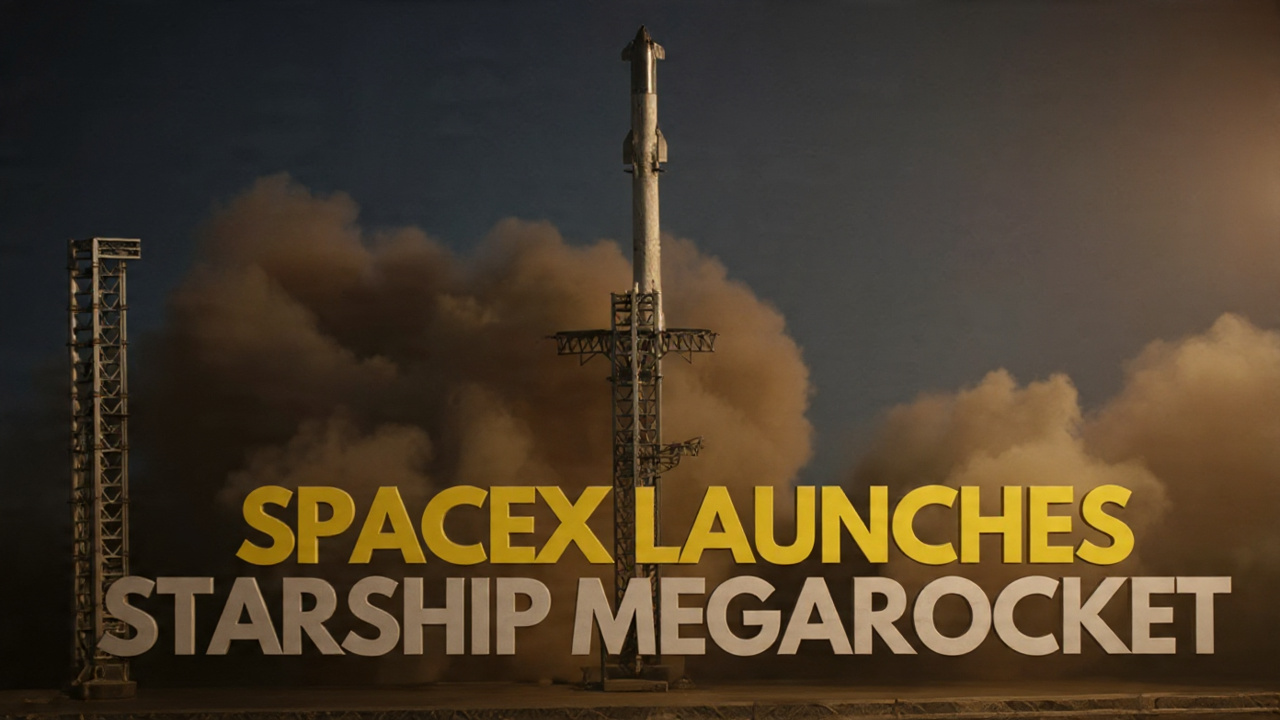
A Brief History of SpaceX’s Megarocket: From Dream to Detonation
Every big invention starts with a dream. Elon Musk’s dream is to help humans live on other planets like Mars. To do that, we need a powerful and reusable rocket. That’s why SpaceX created the Starship system.
The megarocket has two parts:
- Super Heavy booster: the bottom part that helps the rocket leave Earth.
- Starship: the top part that can carry people and cargo into space.
Together, they stand nearly 400 feet tall. It’s the biggest and most powerful rocket humans have ever tried to build. It can carry more than 100 metric tons into orbit!
But as with many other new Technologies, it hasn’t been easy.
Explosive Setbacks
Do you remember the news stories about rockets blowing up? That was Starship.
In its early days, almost every test ended in disaster:
- Starship SN4 exploded during testing in May 2020.
- SN8 flew high but crashed while landing in December 2020.
- SN10 landed safely in March 2021—then exploded a few minutes later.
Still, these setbacks helped SpaceX learn. They used each failure to make the next version better. That’s part of their approach: “Fail fast, learn faster.”
Just like when you’re learning a new skill, making mistakes can help you improve. SpaceX kept going—and it started to pay off.
Redemption on the Horizon: Starship’s Turning Point
Things have changed. After all the failures, SpaceX has begun to achieve real success.
The most recent Starship test wasn’t perfect—but it was the best one yet. It hit more of its goals and gave hope that the system may soon be ready for real missions.
Key Successes in Recent Tests:
- Starship flew high without breaking apart.
- The Super Heavy booster worked better and showed it might be reused.
- The top part of Starship did successful engine burns in space.
This showed that SpaceX is getting close to building a rocket that can go to space, come back, and be used again—and that’s a game-changer.
Why Time May Be Running Out for SpaceX
Even with these wins, there’s still a lot of pressure. SpaceX isn’t the only company trying to lead the future of space travel—and they can’t afford to move too slowly.
Pressure from NASA and Government Contracts
NASA gave SpaceX a $2.9 billion contract through the Artemis program. The goal? To use Starship to land astronauts on the Moon.
But that means Starship has to be ready, safe, and tested—soon. If it takes too long, SpaceX could lose NASA’s trust and funding.
The Rise of Rivals
Other companies and countries want to lead space exploration too:
- Blue Origin and Boeing are both building large rockets.
- China is doing big lunar missions.
- Europe and India are also growing quickly in space Tech.
SpaceX is ahead—for now—but others are catching up. They need to keep pushing forward.
Environmental and Regulatory Hurdles
SpaceX tests Starship in Boca Chica, Texas. But there have been concerns:
- The tests may be harming local wildlife and people.
- The FAA (Federal Aviation Administration) is watching closely.
If SpaceX doesn’t follow the rules, it could face big problems like delays or shutdowns.
What’s at Stake Beyond Business
Let’s think bigger. Starship is more than just a rocket.
It’s a tool for making life on other planets possible. If it works, we could:
- Send humans to Mars,
- Build science labs on the Moon,
- Reduce the cost of launching satellites, and
- Even open up space tourism.
If Starship fails or takes too long, all this might be delayed for decades.
The Bigger Picture
Here’s what else could happen if SpaceX succeeds:
- More people could access space.
- New industries could be built off Earth.
- We could learn how to protect Earth from disasters.
- Countries might work together more in space.
Starship isn’t just a rocket—it’s a symbol of the future we’re all trying to reach.
Lessons in Resilience and Innovation
SpaceX’s story teaches us important lessons that go beyond rockets:
- Keep improving small pieces rather than waiting for something perfect.
- Don’t be afraid to fail—it’s how you grow.
- Be open about successes and problems.
- Be bold when pushing Science and Tech forward.
These lessons are useful whether you’re working in climate tech, AI, or any other big project.
What’s Next for SpaceX?
Here’s what we’re likely to see soon:
- More Starship test flights in 2024 and 2025.
- New launch sites at Kennedy Space Center.
- Starship launching satellites and cargo for testing.
- More plans on how to live on Mars.
But most importantly, SpaceX must prove they can meet goals without more failures or holdups. Everyone—from fans to scientists—is paying attention.
Starship’s redemption has begun—but the real work is only just starting.
Final Thoughts: A Rocket, A Redemption, and a Race Against the Clock
SpaceX is aiming high. Building the world’s biggest rocket is already hard. Doing it fast, under pressure, and in front of the whole world? That’s even harder.
If Starship succeeds, spaceflight could change forever. We could go to the Moon, Mars, or beyond. But if they miss this chance—because of delays, money issues, or more setbacks—they could lose their lead.
Space exploration is special. It shows us what’s possible when humans dream big, work hard, and use Technology and Science to do amazing things.
So the next time you watch a Starship launch, remember: it’s not just a rocket—it’s our future.
🚀 What Do You Think?
Did Starship’s latest test make you believe in SpaceX again? Do you think the megarocket will beat the clock—or run out of time? Share your thoughts in the comments below and let’s talk future, failure, and flight beyond Earth.
If you’re as fascinated by space exploration as we are, be sure to subscribe to our newsletter for more updates on SpaceX, cutting-edge Science, and the Tech shaping our tomorrow.
Read This New Article: Windows 10 Is Dead: Upgrade to One of These Great Windows 11 Laptops