

A New Chapter for PlayStation Portal
When Sony first unveiled the PlayStation Portal, reactions were mixed. Many gamers saw it as a curious experiment — a Remote Play-only handheld limited by the need for a nearby PlayStation 5 and a stable Wi-Fi connection. It lacked Bluetooth audio, had no native apps, and depended entirely on a host console.
But now, Sony’s latest insider roundtable has completely reframed that narrative. The PlayStation Portal, it turns out, isn’t a side project — it’s the foundation of Sony’s next-generation ecosystem. Behind the scenes, the tech giant is preparing to push this device far beyond its current limits.
From cloud streaming integration and 3D audio advancements to multi-device PlayStation synergy, Sony’s ambitions make it clear: the PlayStation Portal isn’t just a remote play gadget — it’s the beginning of a new hybrid gaming era.
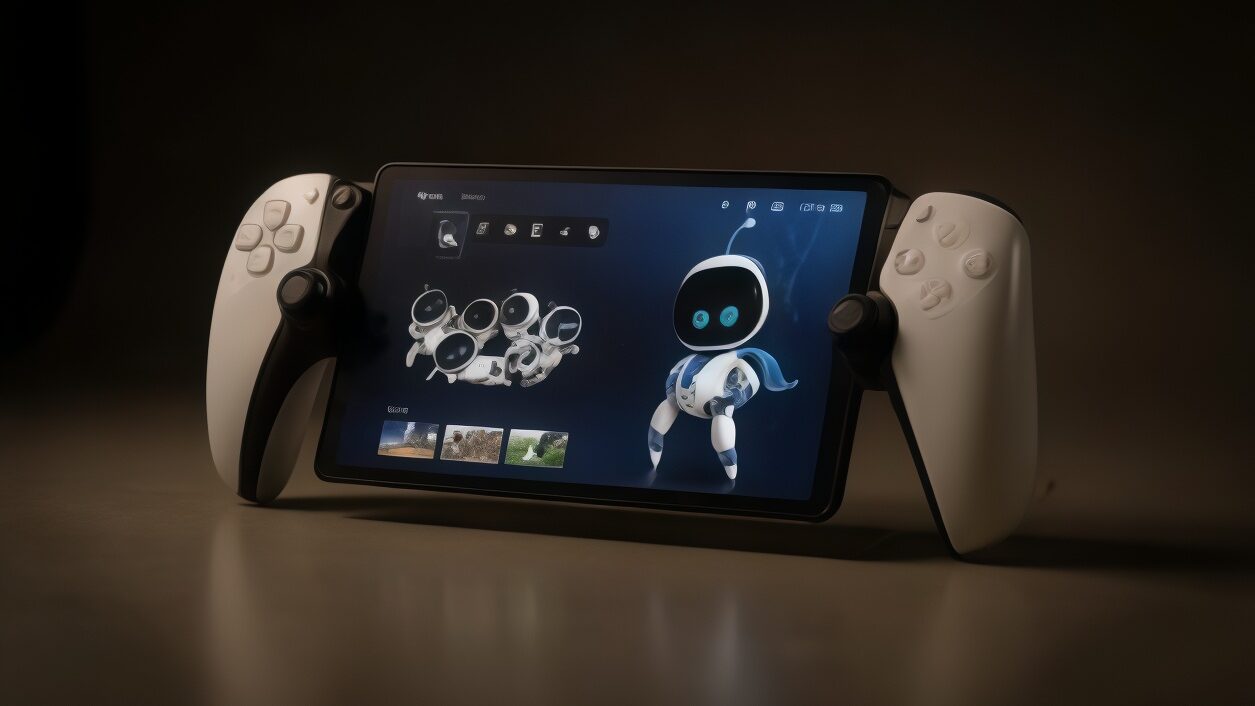
The Portal’s Current Role: A Foundation for Expansion
During the roundtable, Sony executives were transparent about what the PlayStation Portal currently represents. It’s not a replacement for a console, but rather a premium extension of the PlayStation 5.
“We designed Portal for gamers who want the full DualSense experience in a more flexible setup,” said a senior product manager at Sony. “It’s the screen that finally does the DualSense justice.”
Every hardware decision — from the 1080p LCD display to the DualSense haptics and adaptive triggers — was made intentionally. Rather than cutting corners, Sony focused on creating a reliable platform for future innovations.
And those innovations are now starting to surface.
The Big Leap: Cloud Streaming Arrives on PlayStation Portal
The highlight of Sony’s discussion was a long-awaited announcement: PlayStation Plus Premium cloud streaming is coming to the Portal.
Up until now, the device acted like a mirror, simply reflecting what your PS5 was already running. Soon, it will become a window — streaming games directly from Sony’s cloud servers without the need for a connected console.
This means you’ll be able to stream titles like Horizon Forbidden West or God of War Ragnarök on your Portal even if someone else is using your PS5 to watch Netflix or play another game.
“Our number one priority is enabling PlayStation Plus Premium game streaming on Portal,” said a platform engineering lead. “The technical challenges are real, but we’re making strong progress toward a seamless, low-latency experience.”
Once this feature launches, PlayStation Portal will no longer be a niche device. It will compete directly with cloud-based handhelds like the Razer Edge and Logitech G Cloud, offering one massive advantage — true DualSense functionality.
Redefining Immersion: Advanced 3D Audio on the Horizon
One of the Portal’s biggest criticisms at launch was its lack of Bluetooth audio. Players were restricted to Sony’s proprietary PlayStation Link earbuds and headsets.
Sony’s response wasn’t to backtrack — it was to double down. At the roundtable, engineers confirmed that the company is developing a next-generation 3D Audio system specifically for the PlayStation Portal.
“The PS5’s Tempest 3D AudioTech was built for stationary play,” explained an audio designer. “The Portal moves with you — so we’re building adaptive sound processing that adjusts dynamically to the device’s position.”
In simpler terms, this could mean head-tracking 3D sound and directional audio profiles that evolve as you move. Combined with Sony’s new Pulse Explore earbuds, the Portal may soon deliver one of the most immersive portable gaming soundscapes ever created.
Sony’s Ecosystem Vision: Beyond Remote Play
Perhaps the most exciting part of Sony’s roadmap is its broader strategy. The PlayStation Portal isn’t meant to exist in isolation. Instead, it’s a vital part of an interconnected PlayStation ecosystem that spans across consoles, handhelds, and cloud infrastructure.
1. Enhanced Second-Screen Experiences
Sony teased the idea of the Portal becoming a dynamic companion device. Imagine playing Spider-Man 2 on your PS5 and using the Portal as an interactive map, inventory screen, or skill manager — all without pausing your main gameplay.
Sony’s upcoming SDK updates will allow developers to integrate deeper second-screen features, transforming the Portal into a true multitasking tool rather than just a streaming display.
2. Cross-Device Integration
Sony’s vision is clear: PlayStation will no longer be tied to a single piece of hardware. Whether you’re on a PS5, PS VR2, or the PlayStation Portal, your saves, trophies, and friends list will follow you seamlessly.
“The Portal isn’t an island — it’s a gateway,” a strategy executive said. “We want players to move freely between devices while staying connected to their world-class games and communities.”
This cross-platform synchronization could turn PlayStation into a unified ecosystem, much like Apple’s ecosystem of iPhones, Macs, and iPads — each device enhancing the other.
Competition and Differentiation: Sony’s Strategic Niche
The handheld gaming market is more crowded than ever. Devices like the Nintendo Switch, Steam Deck, and ROG Ally have set a high bar for portable performance.
But Sony isn’t chasing raw specs. Instead, the PlayStation Portal is positioned as a luxury companion for PS5 owners — not a standalone console.
“The Portal isn’t about competing with the Switch,” said Sony’s product manager. “It’s about giving players a flawless PlayStation 5 experience anywhere in their home — without compromise.”
While Steam Deck players run PC titles on the go, Portal users are experiencing the true PS5 version of God of War Ragnarök — complete with DualSense triggers, haptics, and fidelity. That’s a selling point no other handheld can currently match.
What This Means for Gamers
Sony’s updates mark a turning point for the PlayStation Portal.
For current owners, the upcoming features — especially cloud streaming — will dramatically expand the device’s utility. What was once a limited accessory will become a versatile cloud-enabled handheld.
For prospective buyers, this announcement eliminates the biggest hesitation. The Portal will soon work even without your PS5 nearby, making it a truly future-proof investment.
And for the industry, Sony’s move signals a broader commitment to a hybrid gaming future. Instead of reviving the Vita or creating a new handheld console, Sony is extending the reach of the PS5 through the cloud — smart, strategic, and sustainable.
The Road Ahead: A PlayStation Experience That Travels With You
Sony’s internal development teams are reportedly experimenting with AI-based streaming optimization, adaptive bitrate control, and server-side latency prediction — all aimed at making cloud play on the PlayStation Portal feel as natural as console play.
Meanwhile, the company is rumored to be exploring Portal-exclusive features like customizable dashboard widgets, PSN integration tools, and real-time voice chat sync with PS5.
If realized, these updates could position the Portal as the ultimate PlayStation companion, perfectly balancing convenience, performance, and immersion.
Conclusion: From Remote Play to PlayStation’s Portable Future
When the PlayStation Portal launched, many dismissed it as a limited Remote Play screen. But Sony’s recent revelations prove it was only the beginning.
Through cloud streaming, advanced 3D audio, and deep ecosystem integration, the Portal is evolving into something far more powerful — a core pillar of Sony’s hybrid gaming future.
This isn’t just a hardware update — it’s a philosophy shift. Sony is no longer designing isolated products; it’s building an ecosystem of experiences that connect seamlessly.
In that sense, the PlayStation Portal isn’t a side project — it’s the blueprint for the future of PlayStation itself. And soon, that future will fit perfectly in the palm of your hand.