The evolution of smartphones has followed a clear pattern for nearly two decades. Bigger screens replaced keypads. Touchscreens replaced buttons. Apps replaced almost everything else. Today, most phones look similar, feel similar, and work in familiar ways.
That sameness signals maturity, not failure.
When technology matures, innovation shifts direction. Instead of refining what exists, companies start asking harder questions. What comes after the touchscreen? What replaces the slab of glass in your pocket?
The answers already exist—in early form.
How We Reached the Touchscreen Era
Smartphones evolved rapidly once capacitive touchscreens became practical. Multi-touch gestures allowed intuitive interaction. App ecosystems flourished. Hardware and software aligned around the screen as the primary interface.
Apple popularized the modern touchscreen phone.
Samsung expanded hardware experimentation at scale.
Since then, progress has focused on cameras, performance, and displays. These improvements matter, but they no longer redefine the category.
That plateau explains why the industry now looks forward instead of inward.
Why Touchscreens Are No Longer Enough
Touchscreens work well, but they also impose limits.
They require constant visual attention. They occupy physical space. They create friction when users want hands-free or ambient interaction.
As digital tasks blend into daily life, screens start to feel intrusive rather than helpful. The next phase of the evolution of smartphones aims to reduce that friction.
Foldables: The First Step Beyond the Slab
Foldable phones represent the most visible step beyond traditional designs.
Instead of abandoning screens, foldables rethink how screens behave.
Why Foldables Matter
Foldables allow:
- Compact portability
- Larger displays when needed
- New multitasking layouts
They bridge phones and tablets without replacing either.
Samsung and other manufacturers have invested heavily in foldable form factors. The goal is not novelty. It is flexibility.
Limitations of Foldable Smartphones
Foldables still depend on touchscreens. They improve form factor, not interaction.
Durability concerns remain. Costs stay high. Software support continues to mature.
Foldables feel transitional—important, but not final.
They answer “how big should a phone be?” but not “should a phone still be a screen?”
AR Glasses: Screens Move Off the Phone
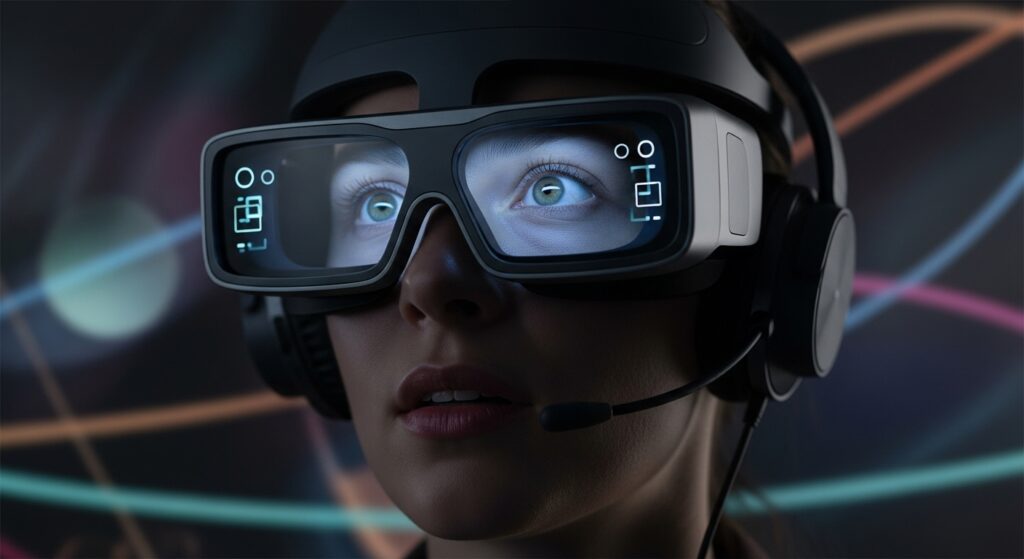
Augmented reality glasses change the relationship between user and device.
Instead of holding a screen, users see digital content layered onto the real world.
Meta, Apple, and others invest heavily in AR research.
What AR Glasses Do Differently
AR glasses enable:
- Hands-free interaction
- Context-aware information
- Persistent digital overlays
Navigation, messages, and alerts appear where you look—not where you hold.
This shift aligns closely with how humans naturally process information.
Why AR Glasses Are Not Mainstream Yet
AR glasses face real challenges:
- Battery life
- Comfort
- Social acceptance
- Privacy concerns
The technology works, but the form factor still evolves.
History suggests that early versions matter less than refinement. Smartphones themselves went through similar awkward phases.
The Role of AI in Post-Touchscreen Devices
Artificial intelligence plays a central role in future interfaces.
AI reduces the need for manual input. Voice, gesture, and contextual understanding replace taps and swipes.
Instead of telling your device what to do, you allow it to anticipate needs.
This shift changes interaction from command-based to collaborative.
Brain–Computer Interfaces: The Most Radical Possibility
Brain–computer interfaces (BCIs) represent the far edge of the evolution of smartphones.
BCIs allow direct communication between the brain and digital systems.
Neuralink and academic institutions actively research this field.
What BCIs Can Realistically Do Today
Current BCIs focus on:
- Medical applications
- Assistive communication
- Neural signal interpretation
Consumer use remains limited and experimental.
Why BCIs Are Not Replacing Phones Soon
BCIs raise serious ethical, medical, and privacy questions.
They require invasive or semi-invasive hardware. They demand strict safety standards. They challenge ideas of consent and data ownership.
BCIs may complement devices before replacing them.
The evolution of smartphones rarely jumps—it layers.
Future Devices May Not Look Like Phones at All
The next dominant device may not fit in your pocket.
It could be:
- A wearable
- An ambient system
- A distributed network of sensors
Your “phone” may become an invisible hub rather than a visible object.
That transition already started through smartwatches, earbuds, and voice assistants.
Ambient Computing: Technology That Disappears
Ambient computing describes technology that blends into the environment.
Instead of opening apps, you interact naturally through speech, movement, and context.
Devices respond without demanding attention.
This concept aligns with how humans prefer tools—useful, quiet, and responsive.
How Privacy Shapes the Future of Smartphones
As interfaces become more intimate, privacy becomes more critical.
Cameras, microphones, biometric sensors, and neural data increase risk.
Trust will define adoption.
Companies that prioritize transparency, on-device processing, and user control will lead the next phase of the evolution of smartphones.
Regulation and Ethics Will Slow and Shape Progress
Future devices move faster than laws.
Governments and regulators will influence:
- Data ownership
- Biometric security
- Neural interface standards
This oversight may slow rollout, but it also protects users.
Long-term success depends on balance, not speed.
What Consumers Actually Want Next
Despite futuristic headlines, user priorities remain simple.
People want:
- Less friction
- More convenience
- Better battery life
- Reliable privacy
Any future device must solve real problems, not just demonstrate technical achievement.
Innovation succeeds when it feels obvious in hindsight.
The Evolution of Smartphones Is About Interaction, Not Hardware
Every major shift in smartphone history changed interaction first.
Keypads to touchscreens changed how users thought.
Touchscreens to ambient systems will change how users live.
Hardware supports that change. It does not lead it.
What Comes After Touchscreens?
No single device replaces the smartphone overnight.
Instead, expect:
- Foldables refining portability
- AR glasses expanding context
- AI reducing manual input
- Wearables absorbing functions
- BCIs advancing quietly in the background
The smartphone becomes less central, yet more powerful through integration.
Final Thoughts on the Evolution of Smartphones
The evolution of smartphones now moves beyond screens and taps. The future favors seamless interaction, minimal effort, and deeper integration into daily life.
Touchscreens will not vanish tomorrow. They will fade gradually as better tools emerge.
The most successful future devices will not demand attention. They will earn trust.
And when that happens, we may look back at glass slabs the way we now look at physical keyboards—with appreciation, not dependence.